
Improving flexibility does not require intense workouts or complicated movements. With consistent practice, yoga offers a natural way to stretch muscles, improve mobility, and develop a stronger mind-body connection. Yoga Poses for Beginners to Improve Flexibility are simple, accessible movements that help release stiffness and encourage relaxation. Whether you practise at home or in a wellness community, these beginner-friendly poses can support your journey towards better physical and mental wellbeing.
Why Is Yoga Important for Improving Flexibility?
Yoga is a holistic wellness practice that connects the body, mind, and breath. It combines gentle movements, stretching, breathing techniques, and mindfulness to support overall wellbeing. Regular yoga practice helps improve joint mobility, muscle flexibility, balance, and body awareness. For beginners, it provides an opportunity to understand their physical limits while gradually developing strength and coordination.
Unlike exercises that focus mainly on physical performance, yoga encourages mindful movement. It teaches you to listen to your body, respect its limitations, and progress without unnecessary pressure. Practising regularly can also help reduce feelings of everyday tension and promote relaxation. This makes yoga for improving flexibility a valuable addition to a balanced natural lifestyle.
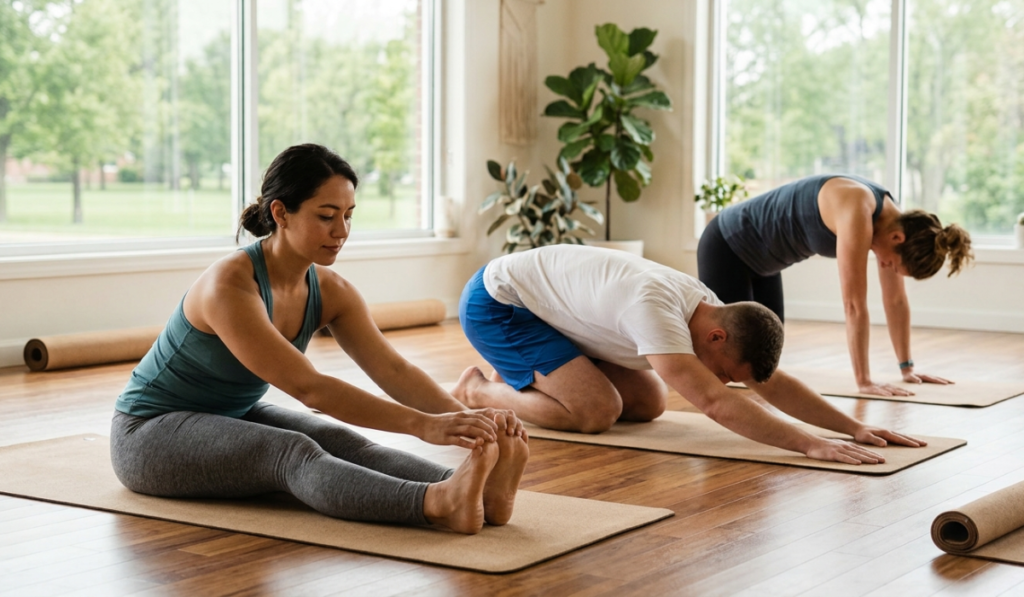
7 Best Yoga Poses for Beginners to Improve Flexibility
If you are new to yoga, start with comfortable movements that gently stretch different muscle groups. The following beginner yoga poses for flexibility can be practised at home with a yoga mat and enough space to move comfortably.
1. Cat-Cow Pose (Marjaryasana-Bitilasana)
Cat-Cow Pose is one of the easiest yoga poses for beginners because it gently mobilises the spine and encourages coordination between breathing and movement. It helps release tension around the back, shoulders, and neck while improving spinal awareness. This pose is particularly useful for people who spend long hours sitting at desks or working on computers.
How to practise:
- Begin on your hands and knees, keeping your wrists beneath your shoulders and knees beneath your hips.
- Inhale as you gently lower your belly and lift your chest.
- Exhale as you round your back and gently bring your chin towards your chest.
- Repeat the movement slowly for 8 to 10 rounds.
2. Downward-Facing Dog (Adho Mukha Svanasana)
Downward-Facing Dog is among the best yoga poses for flexibility because it stretches several areas of the body simultaneously. It targets the hamstrings, calves, shoulders, and back while helping develop upper-body strength. Beginners can keep their knees slightly bent to make the pose more comfortable and avoid forcing their heels towards the floor.
How to practise:
- Start on your hands and knees.
- Spread your fingers and press your palms into the mat.
- Lift your hips upwards and gently straighten your legs as comfortable.
- Keep your head relaxed between your arms.
- Hold for 5 comfortable breaths.
3. Child’s Pose (Balasana)
Child’s Pose is a gentle resting posture that encourages relaxation while stretching the hips, thighs, and lower back. It is especially helpful for beginners who need a comfortable position between more challenging movements. This pose also creates an opportunity to focus on breathing, release unnecessary physical tension, and reconnect with the present moment.
How to practise:
- Kneel on your yoga mat and bring your big toes together.
- Gently sit your hips towards your heels.
- Extend your arms forward or rest them beside your body.
- Lower your forehead towards the mat or a cushion.
- Breathe naturally and remain comfortable for 30 to 60 seconds.
4. Standing Forward Bend (Uttanasana)
Standing Forward Bend is one of the most effective simple yoga stretches for beginners who want to improve flexibility in their hamstrings, calves, and lower back. The pose encourages a gentle release of tension along the back of the body. Beginners should bend their knees whenever necessary instead of trying to touch their toes.
How to practise:
- Stand straight with your feet approximately hip-width apart.
- Slowly bend forward from your hips.
- Allow your upper body and head to relax.
- Bend your knees slightly if your hamstrings feel tight.
- Hold the position for 20 to 30 seconds while breathing comfortably.
5. Butterfly Pose (Baddha Konasana)
Butterfly Pose is an excellent beginner-friendly movement for improving hip mobility and stretching the inner thighs. It is particularly beneficial for individuals who spend much of their day sitting. Practising this posture mindfully can help reduce feelings of stiffness around the hips while encouraging a comfortable seated position.
How to practise:
- Sit on your mat with your legs extended.
- Bring the soles of your feet together.
- Hold your feet gently with both hands.
- Allow your knees to move naturally towards the floor.
- Sit comfortably with a straight spine and breathe for 30 seconds.
6. Cobra Pose (Bhujangasana)
Cobra Pose gently stretches the chest, shoulders, and abdominal region while encouraging spinal extension. It is a useful addition to a beginner yoga routine for flexibility, especially for people who experience stiffness after prolonged sitting. The movement should remain gentle, with no pressure to lift the chest higher than your comfortable range.
How to practise:
- Lie on your stomach with your legs extended.
- Place your palms beneath your shoulders.
- Keep your elbows close to your body.
- Inhale and gently lift your chest using your back muscles.
- Keep your shoulders relaxed and hold for 15 to 20 seconds.
7. Low Lunge Pose (Anjaneyasana)
Low Lunge Pose helps stretch the hip flexors and front thighs while improving lower-body mobility. It is particularly useful for people who spend extended periods sitting, as the hip flexors can become stiff with limited movement. Beginners can place a folded blanket beneath the back knee for additional comfort and support.
How to practise:
- Begin in a kneeling position.
- Step your right foot forward and place it flat on the mat.
- Keep your left knee resting comfortably on the floor.
- Gently move your hips forward without forcing the stretch.
- Hold for 20 to 30 seconds and repeat on the opposite side.
Beginner Yoga Routine for Flexibility at Home
Building a consistent routine is more important than attempting difficult postures immediately. A beginner-friendly session can take approximately 15 to 20 minutes and include gentle movements that target different muscle groups. Start with Cat-Cow Pose, followed by Downward-Facing Dog, Butterfly Pose, Low Lunge, and Child’s Pose.
Practise each posture with slow breathing and controlled movements. Avoid rushing between poses or comparing your flexibility with others. If you feel discomfort, reduce the stretch or return to a resting position. This simple routine makes the best yoga poses for beginners at home accessible to people with different fitness levels and experience.
How to Improve Flexibility Through Yoga Naturally
Improving flexibility is a gradual process that requires patience, consistency, and mindful practice. Rather than forcing your body into deeper stretches, focus on developing comfortable movement patterns. Practising yoga three to five times a week can help build a sustainable habit, although even shorter sessions can be beneficial.
Consider these practical habits:
- Practise consistently: Include daily yoga stretches for beginners in your morning or evening routine.
- Focus on breathing: Take slow, comfortable breaths during every posture.
- Stay hydrated: Maintain adequate water intake throughout the day.
- Warm up gently: Prepare your muscles with light movements before deeper stretching.
- Respect your limits: Never force a stretch or ignore sharp pain.
- Allow recovery: Give your body enough rest between challenging sessions.
Remember that flexibility develops differently for everyone. Progress should be measured through improved comfort, movement, and body awareness rather than how far you can stretch.
The Connection Between Yoga, Mindfulness, and Inner Wellness
Yoga is more than a physical activity. It is also an opportunity to develop mindfulness, self-awareness, and emotional balance. When you coordinate breathing with movement, you learn to pay attention to the present moment instead of becoming distracted by everyday worries. This mindful approach can make your yoga practice more meaningful and enjoyable.
Combining yoga with meditation, positive thinking, and healthy lifestyle habits can support a more balanced approach to wellness. Ancient yogic wisdom also emphasises harmony between the body, mind, and spirit. Through regular practice, individuals can create space for personal growth, self-reflection, and a deeper connection with themselves and their surroundings.
Building a Wellness Community Through Yoga
Wellness becomes more meaningful when people learn and grow together. Practising yoga in a supportive community encourages individuals to share experiences, develop healthy habits, and motivate one another. Community-based wellness initiatives can also make yoga and mindfulness practices more accessible to people from different backgrounds and age groups.
Supporting non-profit wellness projects, participating in yoga programmes, and volunteering for community activities are meaningful ways to contribute to collective wellbeing. Individuals can also support initiatives working towards future Wellness Villages and holistic wellness spaces through responsible participation, membership, volunteering, and donations. Together, small individual efforts can help create a healthier and more mindful society.
Frequently Asked Questions (FAQs)
1. Which yoga poses are best for beginners to improve flexibility?
Cat-Cow Pose, Child’s Pose, Butterfly Pose, Downward-Facing Dog, Cobra Pose, and Standing Forward Bend are excellent starting points. These beginner-friendly movements gently stretch different muscle groups and improve body awareness. Practise them regularly, maintain comfortable breathing, and avoid forcing your body into positions beyond your current flexibility.
2. How often should beginners practise yoga to improve flexibility?
Beginners can start with 15 to 20 minutes of yoga three to five times a week. Consistency is more important than practising for long periods. As your comfort and experience improve, you can gradually increase the duration of your sessions while allowing enough time for rest and recovery.
3. Can I improve flexibility through yoga at home?
Yes, you can improve flexibility through yoga at home with a comfortable space, a yoga mat, and a beginner-friendly routine. Start with simple stretches and follow proper instructions for each posture. Practising mindfully and consistently can help improve mobility without requiring expensive equipment or a gym membership.
4. How long does it take to improve flexibility through yoga?
The time required depends on your starting flexibility, age, physical activity, and consistency. Some people notice improvements in movement and comfort within a few weeks, while greater flexibility may take several months. Focus on gradual progress instead of expecting immediate results or comparing yourself with experienced practitioners.
5. Is yoga safe for beginners with stiff muscles?
Gentle beginner yoga is generally suitable for many people with stiff muscles when practised within comfortable limits. However, avoid forcing stretches or continuing through pain. People with existing injuries, medical conditions, or significant mobility limitations should seek guidance from a qualified healthcare professional before beginning a new yoga routine.