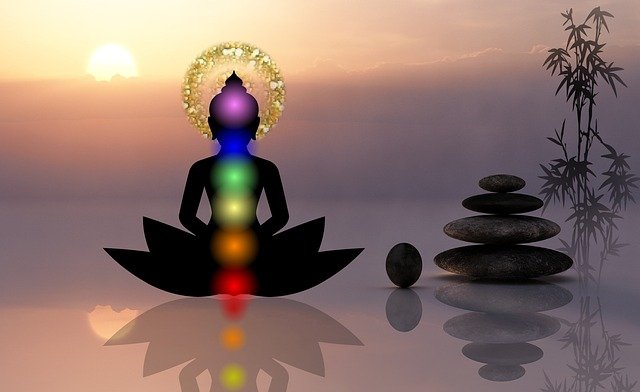
Life today moves fast, and our minds often move even faster. Yoga for Inner Peace offers a gentle, time-tested path back to stillness, helping you quiet mental noise and reconnect with your true self. In this guide, you will learn practical yoga techniques, breathing methods, and daily habits that support a calmer, more balanced mind. Whether you are a beginner or an experienced practitioner, these insights will help you build a sustainable inner peace practice rooted in ancient wisdom and modern wellness understanding.
What Is Inner Peace and Why Yoga Helps
Inner peace is not the absence of problems, but the ability to remain centered even when life feels chaotic. It is a steady state of calm that comes from within, rather than from external circumstances. Many people search for this feeling through material comfort, only to realize that lasting peace comes from how we relate to our own thoughts and emotions. Yoga addresses this directly by working on the body, breath, and mind together, rather than treating them as separate systems, which is why it has remained relevant for thousands of years across cultures and generations.
Yoga helps because it slows down the nervous system, reduces the constant chatter of the mind, and creates space between a thought and our reaction to it. This space is where real peace begins to grow. Instead of suppressing stress, yoga teaches you to observe it, understand it, and gradually release it through movement, breath awareness, and stillness, making it one of the most holistic tools available for emotional balance.
The Connection Between Yoga and a Calm Mind
How Yoga Regulates the Nervous System
Every yoga posture, breath pattern, and moment of stillness sends signals to your nervous system. Slow, mindful movement combined with deep breathing activates the parasympathetic nervous system, often called the rest-and-digest state, which naturally lowers heart rate, reduces cortisol, and eases muscle tension. Over time, regular practice trains your body to shift out of stress mode more quickly, giving you a physiological foundation for a calmer mind rather than relying on willpower alone to feel relaxed.
The Mind-Body Link in Yoga Philosophy
Ancient yogic texts describe the mind and body as deeply interconnected, meaning that tension in one always affects the other. When your body is tight and your breath is shallow, your thoughts tend to feel scattered and anxious. Yoga uses physical postures, known as asanas, as a doorway into the mind, gently loosening the body so the mind naturally follows. This is why even a short, gentle yoga session can leave you feeling mentally lighter, not just physically more flexible.
Best Yoga Practices for Inner Peace
Pranayama: Breathing Techniques for Calm
Pranayama, or controlled breathing, is one of the most powerful Inner Peace Practices within the yogic tradition. Techniques such as Nadi Shodhana, or alternate nostril breathing, and Bhramari, the humming bee breath, help balance the nervous system and quiet mental restlessness within minutes. Practicing pranayama for just five to ten minutes each morning can set a peaceful tone for the entire day, and it requires no equipment, making it accessible to almost everyone regardless of fitness level or experience.
Gentle Asanas That Soothe the Mind
Certain yoga postures are especially effective for calming the mind, including Child’s Pose, Cat-Cow stretches, Seated Forward Bend, and Legs-Up-the-Wall Pose. These postures encourage slow, mindful movement rather than intensity, helping release physical tension stored in the hips, shoulders, and spine, areas where stress commonly accumulates. Practicing these gentle asanas with awareness, rather than rushing through them, allows the nervous system to settle and creates a natural sense of grounded calm that lingers well after the practice ends.
Yoga Nidra for Deep Relaxation
Yoga Nidra, often called yogic sleep, is a guided relaxation practice that brings the body into a state deeper than ordinary rest while keeping the mind gently aware. Practiced lying down, it systematically relaxes each part of the body while guiding attention inward, making it especially helpful for people dealing with anxiety, overthinking, or difficulty switching off at night. Many practitioners describe Yoga Nidra as one of the fastest ways to experience genuine inner stillness, even for those new to meditation.
Meditation for Inner Peace: A Natural Companion to Yoga
Meditation for Inner Peace works hand in hand with yoga, since both practices train the mind to observe rather than react. While yoga prepares the body and settles restless energy, meditation deepens that stillness by teaching you to sit with your thoughts without judgment. Simple practices such as breath awareness meditation, body scanning, or loving-kindness meditation can be done for as little as ten minutes daily, yet the cumulative effect on mental clarity and emotional resilience is significant over time.
Combining a short yoga sequence with a brief meditation session creates a powerful ritual for the mind. The physical movement releases tension that would otherwise distract you during stillness, making it easier to sit quietly afterward. This pairing is especially useful for beginners who find meditation alone challenging, since the body often needs to move first before the mind is willing to settle into silence.
Daily Inner Peace Practices You Can Start Today
Building inner peace is less about occasional intense effort and more about small, consistent habits woven into daily life. Consider incorporating the following practices:
- Start your morning with five minutes of mindful breathing before checking your phone
- Take short mindful walks in nature, paying attention to sounds, textures, and sensations
- Practice gratitude journaling each evening, writing down three things that went well
- Set aside screen-free time before bed to allow the mind to naturally wind down
- Use gentle stretching breaks during work hours to release accumulated tension
These small practices, when repeated daily, gradually reshape how your mind responds to stress, making calmness feel more natural rather than forced.
The Power of Mindful Awareness Throughout the Day
Inner peace is not confined to your yoga mat or meditation cushion. It extends into how you eat, speak, listen, and move through your daily responsibilities. Practicing mindful awareness, meaning fully paying attention to the present moment during ordinary activities like washing dishes or drinking tea, trains the mind to stay anchored rather than constantly drifting into worry about the future or regret about the past, which is often the true source of inner unrest.
Creating a Peaceful Yoga Routine at Home
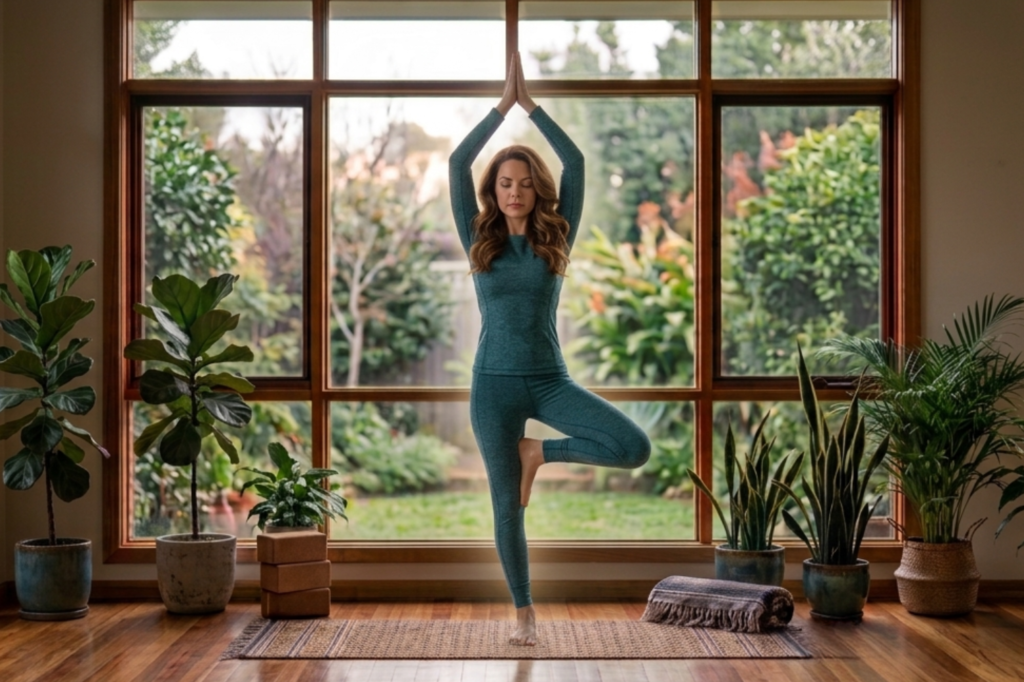
You do not need a studio, special equipment, or hours of free time to build a meaningful yoga practice for inner peace. A quiet corner of your home, a mat, and fifteen to twenty minutes of undisturbed time are enough to begin. Start with a few rounds of gentle breathing, move into two or three calming postures, and end with a few minutes of stillness or Yoga Nidra. Consistency matters far more than duration, so a short daily practice will serve you better than an occasional long session.
Lighting a candle, playing soft instrumental music, or simply sitting near a window with natural light can enhance the calming atmosphere of your practice space. Over time, this dedicated space becomes psychologically associated with peace, so simply stepping onto your mat begins to signal your nervous system to relax, even before you start moving.
The Role of Community and Guidance in Sustaining Inner Peace
While personal practice is essential, many people find that inner peace deepens significantly when supported by a like-minded community. Group yoga sessions, guided meditation circles, and wellness workshops offer accountability, shared learning, and a sense of belonging that solo practice cannot always provide. Being surrounded by others who value mindful living reinforces your own commitment and often introduces new techniques or perspectives you may not have discovered alone.
Wellness communities and educational programs also provide access to experienced teachers who can guide practice safely, correct alignment, and answer questions rooted in years of study. Learning from knowledgeable guides, rather than relying solely on online videos, ensures that your practice remains both effective and aligned with authentic yogic principles, supporting long-term growth rather than short-term relief.
Common Mistakes to Avoid
Many beginners approach yoga for inner peace with unrealistic expectations, hoping for instant calm after a single session. In reality, lasting peace develops gradually through consistent practice, much like physical strength builds over weeks rather than days. Avoid comparing your practice to others, rushing through poses to achieve a certain look, or skipping breathwork entirely, since breath is often the most important element for calming the mind, even more so than the physical postures themselves.
Another common mistake is treating yoga purely as exercise while ignoring its mental and reflective components. To truly benefit from yoga for inner peace, allow moments of stillness after movement, resist the urge to immediately return to screens or tasks, and give your mind time to absorb the calm you just created through practice.
Frequently Asked Questions
1. How long does it take to feel inner peace through yoga?
Most practitioners notice reduced stress and improved mood within a few weeks of consistent practice, though deeper emotional shifts typically develop over several months as the nervous system adapts to regular relaxation.
2. Can beginners practice yoga for inner peace without prior experience?
Yes, beginners can start with simple breathing exercises and gentle postures like Child’s Pose or Legs-Up-the-Wall Pose, gradually building confidence and comfort before moving into more advanced practices.
3. What is the best time of day to practice yoga for a calm mind?
Early morning is ideal since it sets a peaceful tone for the day, though evening practice can also help release accumulated tension and prepare the mind for restful sleep.
4. Is meditation necessary alongside yoga for inner peace?
While not mandatory, combining meditation with yoga significantly deepens mental stillness, since yoga prepares the body while meditation trains the mind to remain calm and focused.
5. How often should I practice yoga to maintain lasting inner peace?
Practicing for fifteen to twenty minutes daily, or at least four to five times a week, tends to produce more sustainable results than occasional longer sessions.