Finding the best way to start meditation does not require a perfect routine, a silent retreat, or years of experience. Meditation begins with creating a small space to pause, breathe, and notice what is happening within you. This guide explains simple meditation practices, how to build consistency, and how mindfulness can support self-awareness, emotional balance, holistic wellness, personal growth, and a deeper connection with yourself and your community.
Why Meditation Can Help You Reconnect With Yourself
Modern life often keeps the mind occupied with responsibilities, notifications, conversations, deadlines, and constant stimulation. Meditation offers an opportunity to step away from this continuous activity and pay attention to your inner experience. Instead of immediately reacting to every thought or emotion, you learn to observe what is happening with greater patience and awareness. This simple practice can help you understand your habits, recognize your needs, and become more intentional about how you respond to everyday situations.
Meditation is also closely connected with the broader idea of mind-body-spirit wellness. Your thoughts can influence how you experience stress, your breathing can affect your sense of calm, and your physical state can influence your ability to focus. Practices such as meditation, yoga, mindful breathing, and quiet reflection can therefore become complementary parts of a holistic lifestyle. The purpose is not to escape daily life, but to develop greater awareness while living it.
The Best Way to Start Meditation as a Beginner
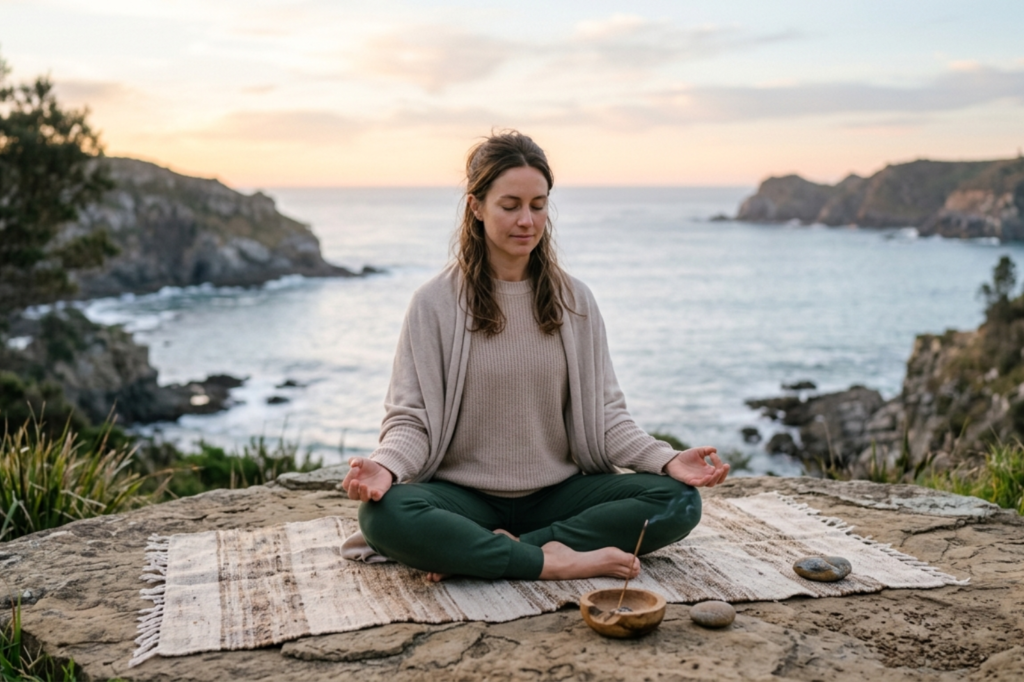
For most beginners, the best way to start meditation is to keep the practice simple, short, and realistic. You do not need to meditate for thirty minutes on your first day. Begin with five minutes in a comfortable place where you are unlikely to be interrupted. Sit on a chair, cushion, or the floor, keeping your body relaxed and your spine naturally upright. Close your eyes if comfortable, or maintain a soft gaze.
Bring your attention to your breathing without trying to control every breath. Notice the sensation of inhaling and exhaling. Your mind will probably wander, and that is completely normal. When you notice that your attention has moved toward a thought, memory, sound, or concern, gently return to your breath. This repeated return is an important part of meditation. You are not trying to stop thinking. You are learning to notice your thoughts without automatically following them.
Create a Meditation Routine You Can Actually Maintain
Consistency is often more useful than intensity when developing a meditation habit. Choose a time that fits naturally into your existing schedule. Some people prefer meditating after waking up because the environment is quieter, while others find an evening practice helpful for creating a peaceful transition away from the day’s activities. The ideal time is the one you can realistically maintain without turning meditation into another source of pressure.
Start by attaching meditation to an existing habit. You might meditate after brushing your teeth, before beginning your morning yoga practice, or after returning home from work. Keep your meditation space simple and comfortable. A cushion, chair, soft lighting, or quiet corner can be enough. If you miss a day, avoid treating it as failure. Simply return to your practice the next day and continue. A sustainable routine develops through repetition, patience, and self-compassion.
Explore Different Meditation Practices
There is no single meditation technique that suits every person. Mindfulness meditation focuses on observing thoughts, feelings, bodily sensations, and surroundings without immediately judging them. Breath meditation uses the natural rhythm of breathing as an anchor for attention. Loving-kindness meditation involves intentionally developing feelings of goodwill toward yourself and others. Guided meditation uses spoken instructions to help you maintain attention and move through a structured practice.
You can also explore meditation alongside yoga, mindful walking, body awareness, journaling, or quiet reflection. For example, after a yoga session, spend five minutes sitting quietly and observing your breathing. During a mindful walk, notice the movement of your feet, the surrounding sounds, and the sensations in your body. Experimentation can help you discover which practices feel meaningful and sustainable. The goal is not to collect techniques, but to find practices that encourage genuine awareness.
Use Meditation to Develop Self-Awareness
Reconnecting with yourself involves more than feeling relaxed for a few minutes. Meditation can create a regular opportunity to notice your internal patterns. You may begin recognizing recurring thoughts, emotional reactions, physical tension, or behaviors that usually happen automatically. This awareness can create a pause between experiencing something and responding to it, giving you more room to make conscious choices.
Try adding a short reflection after meditation. Ask yourself questions such as, “What am I feeling right now?” “Where do I notice tension in my body?” or “What has been occupying my mind today?” You do not need to find an immediate answer. The purpose is simply to listen inwardly. Over time, these small moments of reflection can support personal growth by helping you understand your values, priorities, boundaries, and everyday experiences with greater clarity.
Common Meditation Mistakes Beginners Should Avoid
One common mistake is expecting meditation to immediately produce complete mental silence. Thoughts are a natural part of the human experience, so having thoughts during meditation does not mean you are doing it incorrectly. Another mistake is becoming overly focused on technique, posture, duration, or whether the session felt “good.” Meditation is a practice of awareness, not a performance that needs to be perfected.
Avoid forcing yourself to sit through significant discomfort simply because you believe meditation requires endurance. Choose a supportive posture and make reasonable adjustments when necessary. It can also help to avoid comparing your experience with someone else’s. One person may enjoy silent meditation, while another may prefer guided sessions. Your practice can change as your needs change. Patience and curiosity are generally more helpful than judgment.
Make Meditation Part of a Holistic Wellness Lifestyle
Meditation can become more meaningful when it is connected with other healthy and mindful practices. Yoga can encourage body awareness and intentional movement, while mindful eating can help you become more attentive to everyday choices. Spending time in nature, maintaining healthy social connections, practicing gratitude, and creating periods of digital rest can also support a lifestyle centered on awareness and balance.
Community can make this journey easier to sustain. Meditation circles, yoga groups, wellness workshops, retreats, educational programs, and volunteer activities can provide opportunities to learn alongside people with similar interests. A wellness-focused community can also encourage shared learning rather than competition. Whether you participate in a local activity, support a non-profit wellness project, volunteer your time, or contribute to initiatives that expand access to holistic wellness, your personal practice can become part of a larger culture of wellbeing.
Turn Your Meditation Practice Into a Personal Growth Journey
Meditation does not have to remain a five-minute activity separated from the rest of your life. You can gradually carry mindfulness into conversations, work, relationships, decision-making, and daily routines. Before responding during a difficult conversation, take one conscious breath. Before starting an important task, pause and notice your attention. When walking outdoors, put your phone away and observe your surroundings. These small actions can transform mindfulness from a scheduled exercise into an everyday approach to living.
As your practice develops, consider setting an intention rather than a rigid expectation. Your intention might be to become more present, understand yourself better, cultivate compassion, or create more space for reflection. You can also share your experience with a supportive wellness community, join educational programs, volunteer at wellness initiatives, or help create opportunities for others to explore meditation. Personal transformation can become more powerful when individual wellbeing and community wellbeing grow together.
A Simple 7-Day Meditation Starting Plan
If you are unsure where to begin, use the following seven-day approach. Keep each session short enough that you can complete it without feeling overwhelmed. The objective is to establish familiarity with meditation rather than achieve a particular mental state.
- Day 1: Sit quietly for five minutes and observe your natural breathing.
- Day 2: Practice five minutes of mindful breathing and gently redirect wandering attention.
- Day 3: Spend five minutes noticing sensations throughout your body.
- Day 4: Try a short guided meditation focused on awareness and relaxation.
- Day 5: Practice mindful walking for five to ten minutes.
- Day 6: Sit quietly and observe thoughts without trying to change them.
- Day 7: Meditate for ten minutes, then write down one thing you noticed about yourself.
After seven days, review what felt comfortable, meaningful, or difficult. You can then create a routine based on your experience rather than following someone else’s schedule. If meditation brings up persistent distress or difficult experiences, consider discussing your situation with an appropriately qualified mental health professional rather than relying on meditation alone.
How Wellness Communities Can Support Your Practice
Personal wellness becomes easier to explore when people have access to supportive spaces, shared knowledge, and meaningful opportunities to participate. Wellness communities can bring together meditation, yoga, mindfulness education, natural living, personal development, and service. Such spaces can help participants learn from experienced practitioners while also creating connections with people who share an interest in conscious and balanced living.
Non-profit wellness initiatives can extend this community approach through educational programs, wellness activities, volunteering opportunities, and projects designed to make holistic practices more accessible. People can contribute in different ways depending on their circumstances. Some may participate in programs, others may volunteer skills or time, and some may choose to support future wellness projects through donations. The broader purpose is to create environments where individual wellbeing, learning, compassion, and community participation can develop together.
Frequently Asked Questions
1. What is the best way to start meditation for beginners?
The best way to start meditation is to begin with a short, simple practice that you can repeat consistently. Start with five minutes of natural breathing in a comfortable, quiet location. When your attention wanders, gently bring it back to your breath. As you become more familiar with meditation, you can gradually explore longer sessions and different techniques.
2. How long should a beginner meditate each day?
A beginner can start with around five minutes per day and gradually increase the duration if the practice feels comfortable. There is no universal requirement for a specific meditation length. Building a realistic habit is often more useful than forcing yourself into long sessions that become difficult to maintain.
3. What should I think about during meditation?
You do not need to think about a particular subject during basic mindfulness meditation. Instead, notice your breathing, bodily sensations, sounds, and thoughts as they arise. When your attention moves away, acknowledge it without criticism and gently return to your chosen point of focus. The practice is about awareness rather than creating an empty mind.
4. Can meditation be combined with yoga and other wellness practices?
Yes. Meditation can complement yoga, mindful walking, journaling, breath awareness, time in nature, and other wellness practices. For example, you might complete a gentle yoga session and then spend five minutes sitting quietly. Combining complementary practices can create a broader routine focused on physical awareness, mental clarity, reflection, and mindful living.
5. How can I connect meditation with a wellness community?
You can explore local or online meditation groups, yoga communities, wellness workshops, retreats, educational programs, and non-profit initiatives. Participation can involve learning, attending activities, volunteering, sharing skills, or supporting wellness projects financially. Community involvement can provide opportunities to learn from others while contributing to spaces that encourage mindfulness, holistic wellness, personal growth, and collective wellbeing.