Yoga is a powerful wellness practice that connects the mind, body, and spirit while supporting overall health. Practising Yoga Poses for Strength and Flexibility can help improve muscle strength, joint mobility, balance, and physical awareness. Whether you are a beginner or an experienced practitioner, the right yoga poses can support a healthier lifestyle. In this guide, discover 13 effective yoga poses, their benefits, and practical tips for including them in your daily wellness routine.
Why Are Yoga Poses Important for Strength and Flexibility?
Yoga combines physical movement, controlled breathing, and mindfulness to support holistic well-being. Regular practice helps strengthen different muscle groups while gradually improving flexibility and body coordination. Unlike exercises that focus mainly on muscle development, yoga encourages balanced movement and greater awareness of physical limitations.
Practising yoga consistently may also support better posture, reduce everyday muscle stiffness, and improve balance. It encourages people to slow down, focus on their breathing, and develop a stronger connection between physical and mental health.
Some important benefits include:
- Muscle strength: Supports the development of core, leg, arm, and back strength.
- Improved flexibility: Helps gradually increase the range of motion in muscles and joints.
- Better balance: Develops stability and body coordination.
- Stress management: Combines mindful breathing with movement to encourage relaxation.
- Body awareness: Helps practitioners understand their physical abilities and limitations.
13 Yoga Poses for Strength and Flexibility
The following yoga poses target different areas of the body. Practise them mindfully, maintain proper alignment, and modify movements according to your comfort and experience.
1. Downward-Facing Dog (Adho Mukha Svanasana)
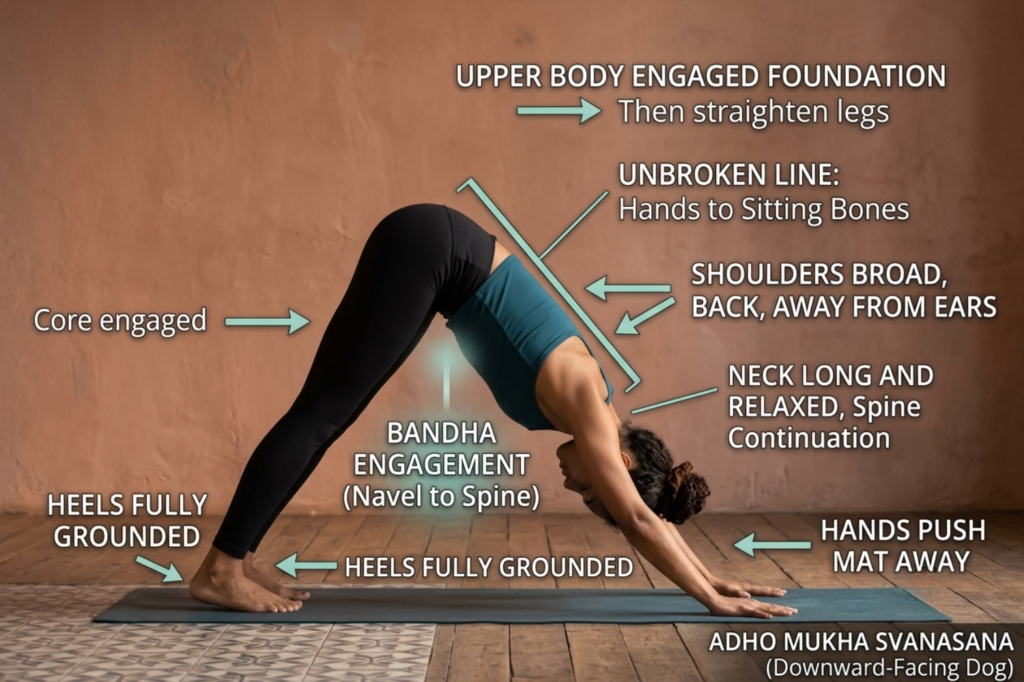
Downward-Facing Dog is a foundational yoga posture that stretches the hamstrings, calves, shoulders, and back while engaging the arms and core. It encourages full-body coordination and helps develop upper-body strength. This pose is particularly useful for people who spend long hours sitting because it encourages movement through the shoulders, spine, and legs.
How to practise:
- Begin on your hands and knees.
- Place your palms shoulder-width apart.
- Lift your hips towards the ceiling.
- Straighten your legs as comfortably as possible.
- Keep your spine long and breathe steadily.
Beginners can bend their knees slightly rather than forcing their heels towards the floor.
2. Warrior I (Virabhadrasana I)
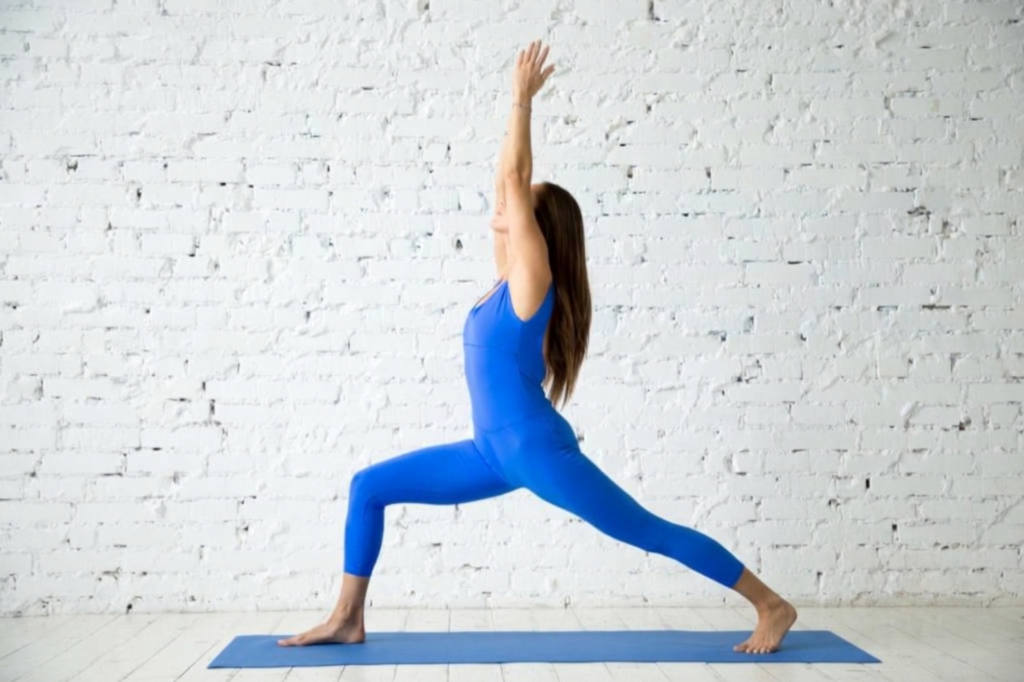
Warrior I is an excellent standing posture for developing leg strength, improving stability, and opening the chest and shoulders. It activates the thighs, glutes, and core while encouraging better posture. Holding this position also develops concentration and physical endurance, making it a valuable addition to a balanced yoga routine.
How to practise:
- Stand with your feet apart.
- Step one foot backwards.
- Bend your front knee while keeping it aligned with your ankle.
- Turn your back foot slightly outward.
- Raise both arms overhead and look forward.
Hold the position for several breaths before repeating on the opposite side.
3. Warrior II (Virabhadrasana II)
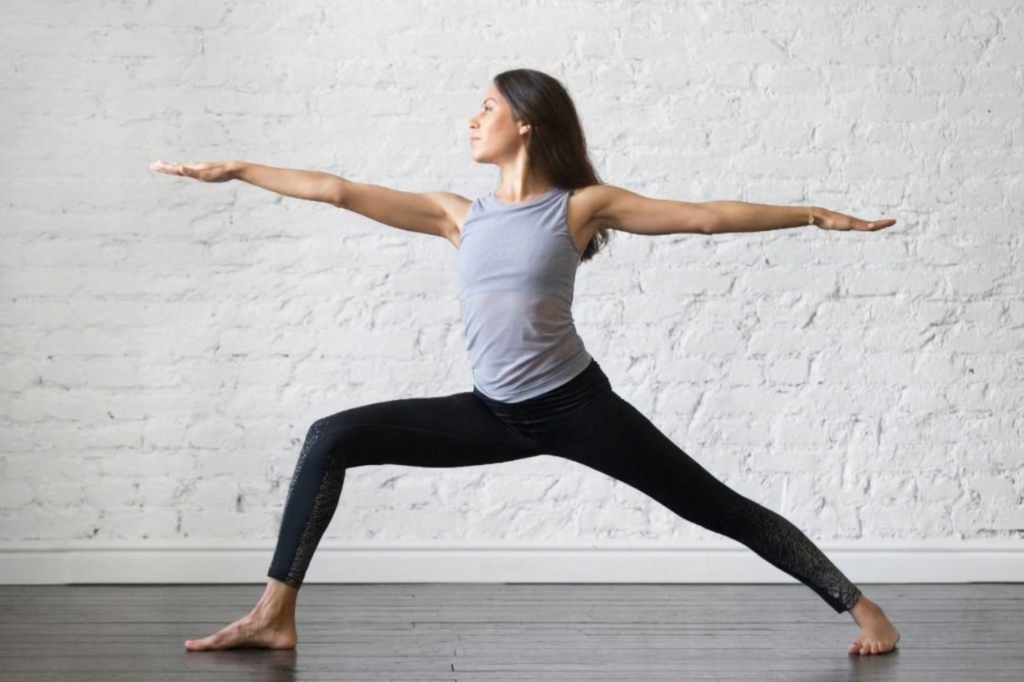
Warrior II strengthens the legs, hips, and core while encouraging flexibility in the inner thighs and shoulders. This posture also improves balance and helps develop awareness of body alignment. Practising it regularly can support lower-body endurance and encourage a confident, grounded feeling during movement.
How to practise:
- Stand with your feet wide apart.
- Turn one foot outward and bend that knee.
- Extend both arms parallel to the floor.
- Keep your shoulders relaxed.
- Look over your front hand.
Maintain steady breathing and avoid allowing your front knee to collapse inward.
4. Plank Pose (Phalakasana)
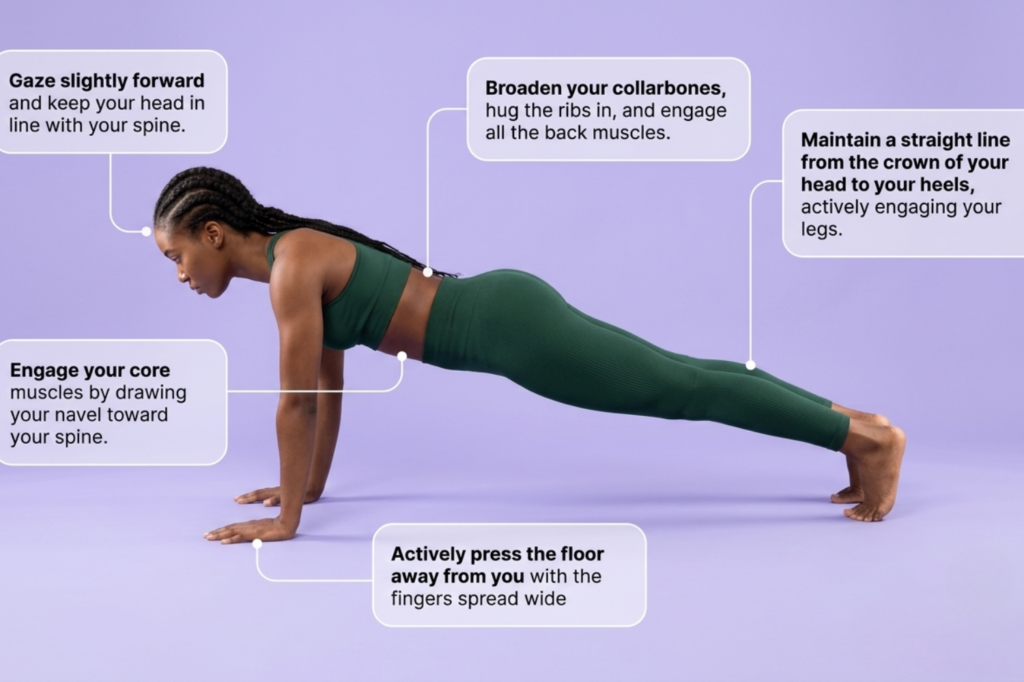
Plank Pose is one of the most effective yoga postures for building core and upper-body strength. It activates the abdominal muscles, shoulders, arms, and legs while teaching the body to maintain stability. A stronger core can also support better posture and movement during everyday activities.
How to practise:
- Begin in a tabletop position.
- Extend both legs backwards.
- Position your shoulders above your wrists.
- Keep your body in a straight line.
- Engage your abdominal muscles and breathe naturally.
Beginners can perform a modified plank with their knees resting on the floor.
5. Tree Pose (Vrikshasana)
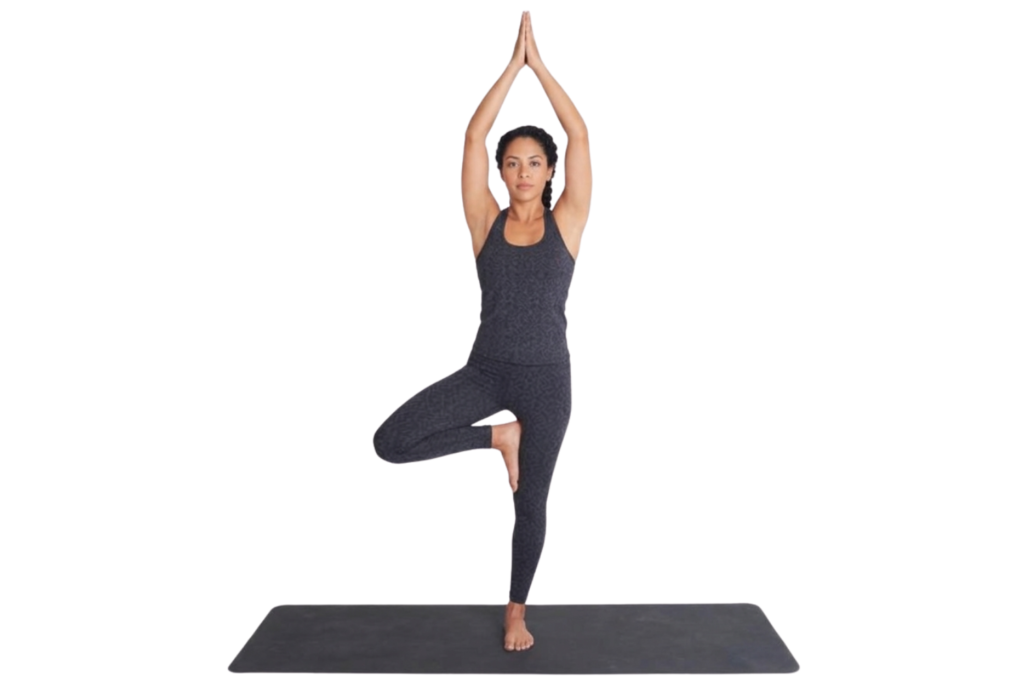
Tree Pose is a balancing posture that develops concentration, stability, and lower-body strength. It strengthens the standing leg while encouraging flexibility in the hips and improving body awareness. The mindful focus required to maintain balance also makes this posture useful for developing patience and mental calmness.
How to practise:
- Stand straight with your feet together.
- Shift your weight onto one leg.
- Place the opposite foot against your inner calf or thigh.
- Bring your hands together at your chest.
- Focus on a stationary point.
Avoid placing your foot directly against your knee joint.
6. Bridge Pose (Setu Bandhasana)
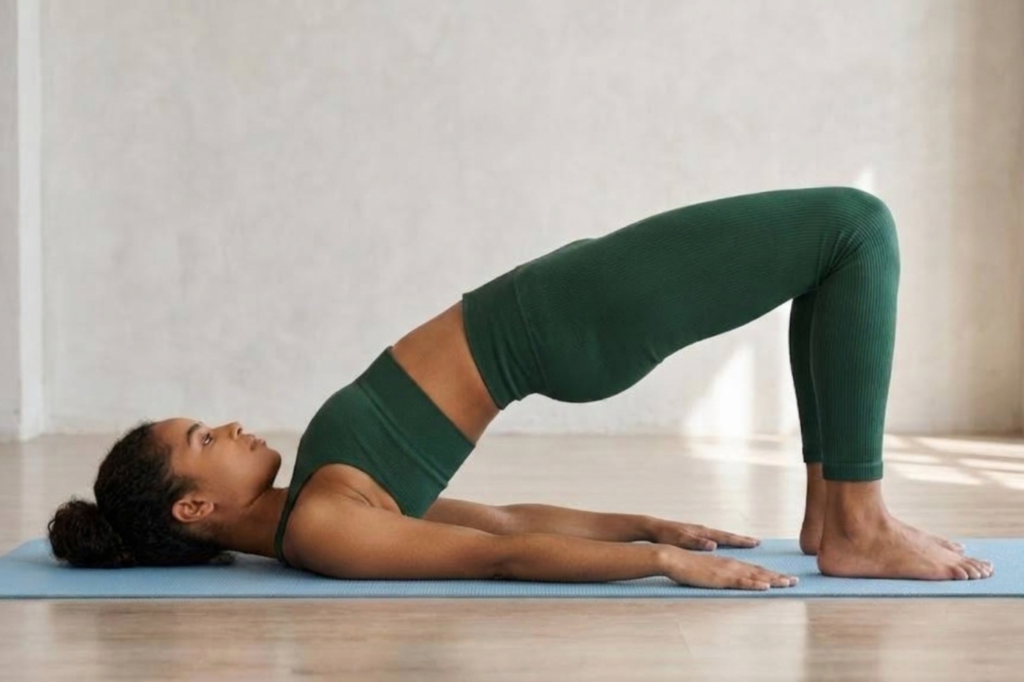
Bridge Pose strengthens the glutes, hamstrings, and back muscles while gently stretching the chest, shoulders, and hip flexors. It encourages spinal mobility and helps counteract the effects of prolonged sitting. This posture is also useful for developing awareness of the relationship between breathing and controlled movement.
How to practise:
- Lie on your back with your knees bent.
- Keep your feet hip-width apart.
- Place your arms beside your body.
- Press your feet into the floor.
- Slowly lift your hips while keeping your shoulders grounded.
Lower your hips gently and repeat according to your comfort.
7. Cobra Pose (Bhujangasana)
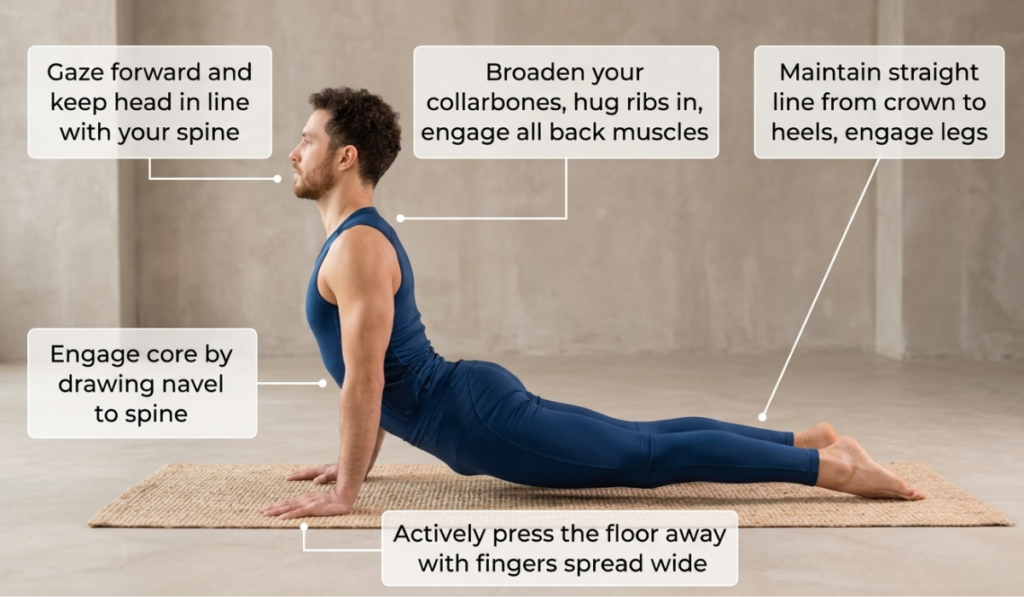
Cobra Pose is a gentle backbend that strengthens the back muscles while stretching the chest, shoulders, and abdominal area. It encourages spinal extension and can help improve posture when practised with proper alignment. The movement should remain controlled, without forcing the lower back into an uncomfortable position.
How to practise:
- Lie on your stomach.
- Place your palms beneath your shoulders.
- Keep your elbows close to your body.
- Gently lift your chest using your back muscles.
- Keep your shoulders relaxed and breathe naturally.
Start with a low cobra and gradually increase the lift as comfortable.
8. Chair Pose (Utkatasana)
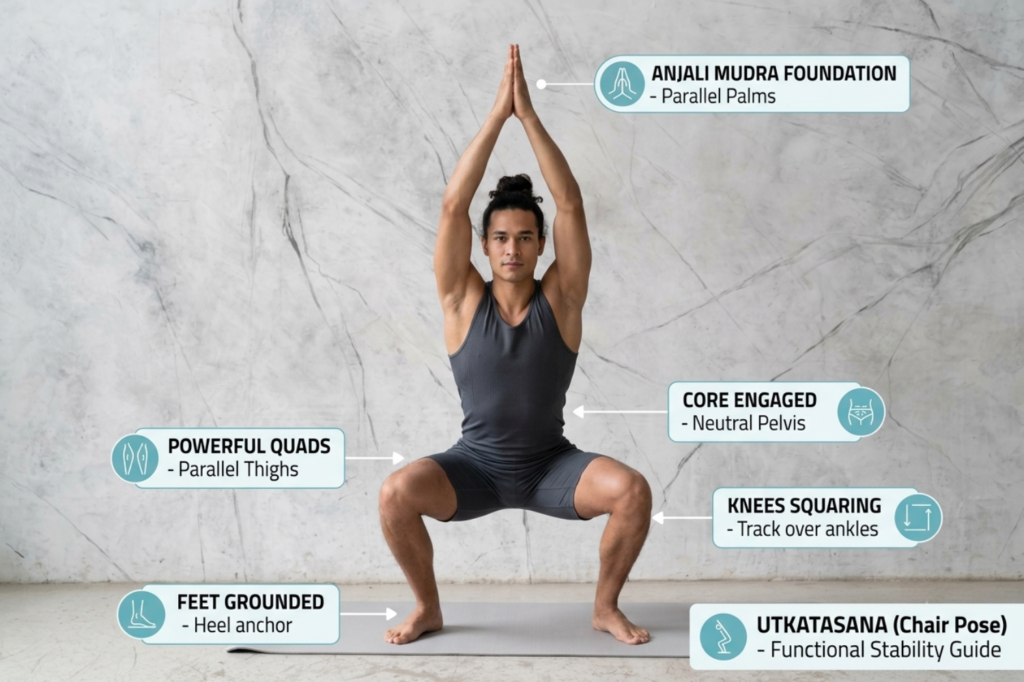
Chair Pose is a powerful standing posture that activates the thighs, glutes, calves, and core. It develops lower-body endurance while encouraging flexibility through the shoulders and upper back. Holding this position requires concentration and controlled breathing, making it beneficial for both physical strength and mindful movement.
How to practise:
- Stand with your feet together or hip-width apart.
- Bend your knees as if sitting on a chair.
- Move your hips backwards.
- Raise your arms overhead.
- Keep your chest lifted and spine neutral.
Avoid allowing your knees to move excessively beyond your toes if this causes discomfort.
9. Triangle Pose (Trikonasana)
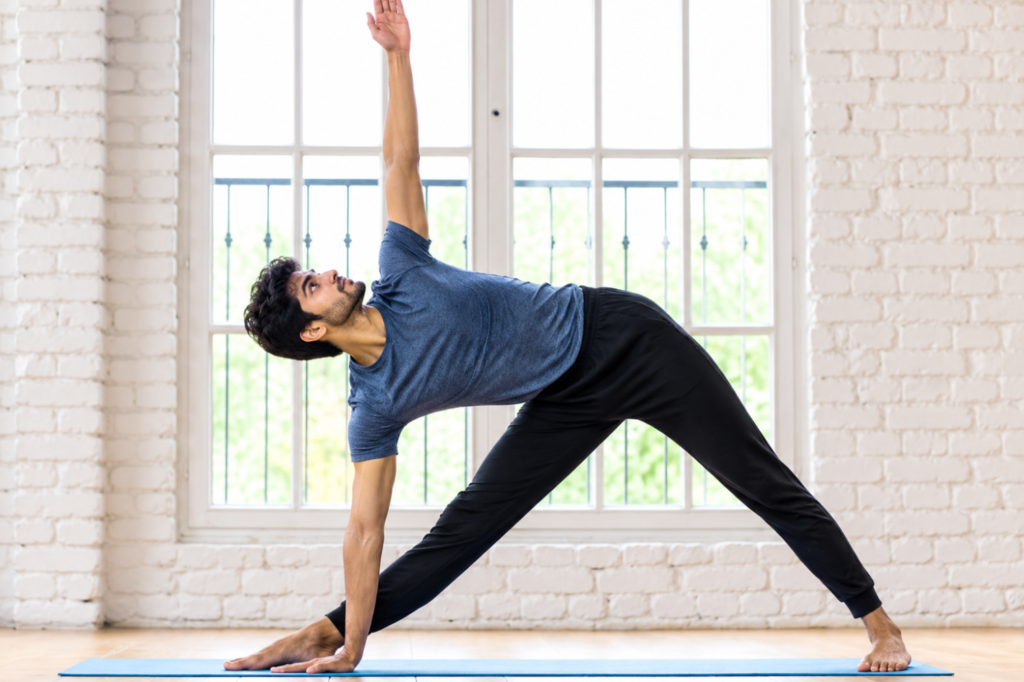
Triangle Pose improves flexibility in the hamstrings, hips, and sides of the body while engaging the legs and core. It encourages better body alignment and develops stability through the feet and lower body. This posture also creates an opportunity to coordinate breathing with controlled stretching.
How to practise:
- Stand with your feet wide apart.
- Turn one foot outward.
- Extend your arms sideways.
- Reach forward and lower one hand towards your shin or a yoga block.
- Extend your opposite arm upwards.
Keep both sides of your torso lengthened rather than collapsing towards the floor.
10. Extended Side Angle Pose (Utthita Parsvakonasana)
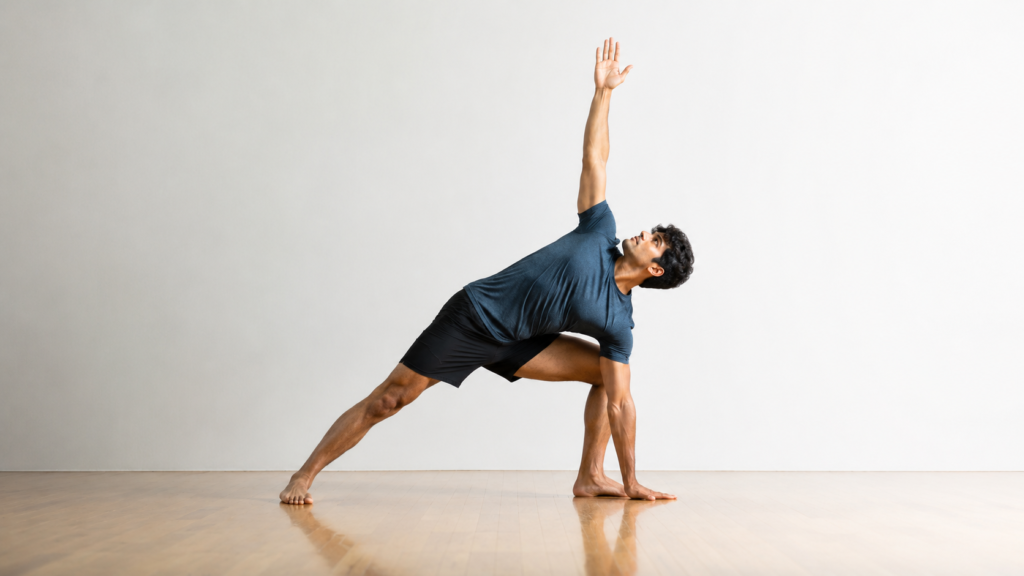
Extended Side Angle Pose strengthens the legs while stretching the inner thighs, hips, and sides of the torso. It also activates the shoulders and core, helping develop full-body coordination. Practising this posture can improve stability and encourage a greater range of comfortable movement through the upper and lower body.
How to practise:
- Begin in Warrior II.
- Bend your front knee.
- Place your front hand on your thigh or a yoga block.
- Extend your opposite arm overhead.
- Create a straight line from your back foot to your fingertips.
Repeat on both sides while maintaining relaxed breathing.
11. Boat Pose (Navasana)
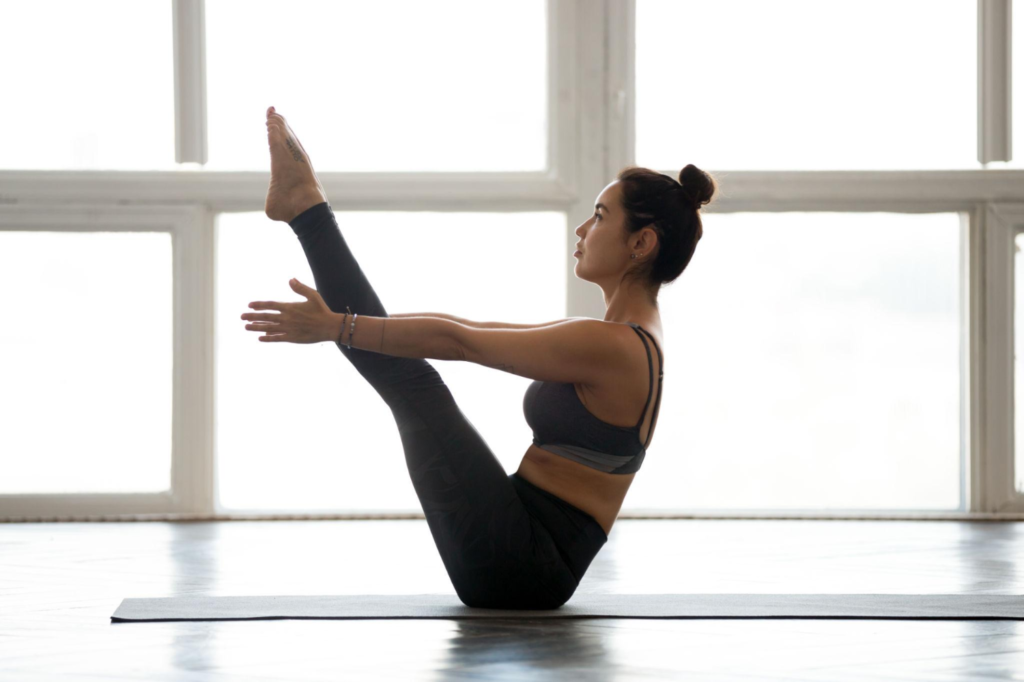
Boat Pose is a core-strengthening posture that activates the abdominal muscles, hip flexors, and spinal stabilisers. It encourages better body control and develops endurance through sustained engagement. This posture can be challenging for beginners, so starting with bent knees and a supported position is a practical way to build strength gradually.
How to practise:
- Sit with your knees bent.
- Lean your upper body slightly backwards.
- Lift your feet off the floor.
- Extend your arms forward.
- Keep your spine long and chest lifted.
For additional support, keep your knees bent or hold behind your thighs.
12. Pigeon Pose (Eka Pada Rajakapotasana Variation)
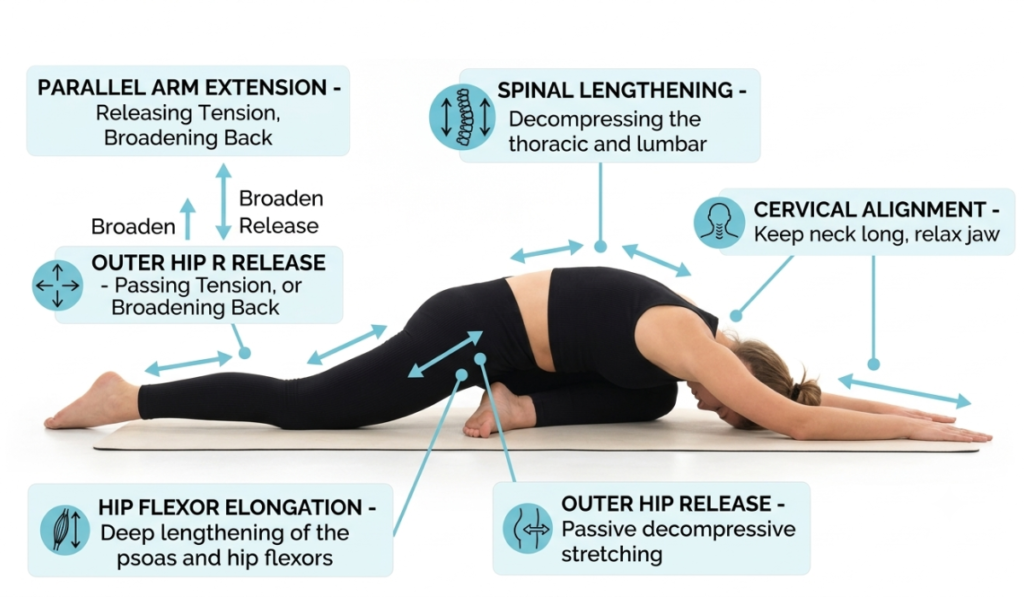
Pigeon Pose is commonly practised to improve hip flexibility and release tension around the gluteal muscles. It provides a deep stretch for the outer hip and encourages mindful breathing during longer holds. People who spend considerable time sitting may find gentle hip-opening practices particularly helpful for improving comfortable movement.
How to practise:
- Begin in a tabletop position.
- Bring one knee forward towards your wrist.
- Extend the opposite leg behind you.
- Keep your hips supported and as level as comfortable.
- Lower your upper body forward if appropriate.
Place a folded blanket beneath your front hip if needed. Avoid forcing the knee into the position.
13. Child’s Pose (Balasana)
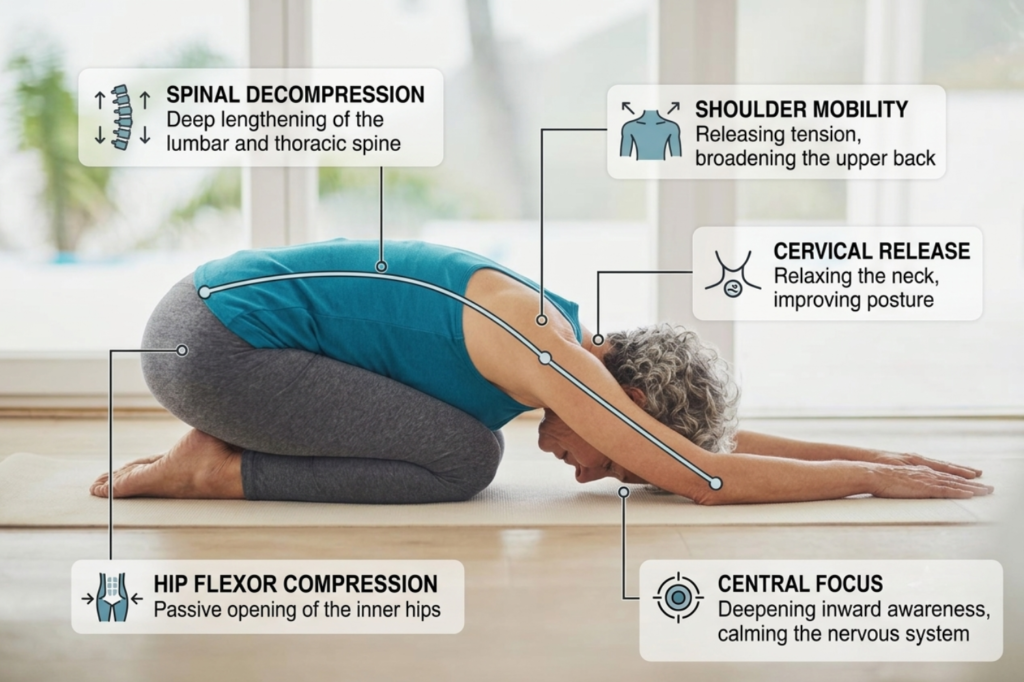
Child’s Pose is a restorative posture that gently stretches the hips, thighs, ankles, and back. Unlike more demanding yoga positions, it encourages relaxation and gives the body an opportunity to recover between movements. It also supports mindfulness by allowing practitioners to focus on slow breathing and physical sensations.
How to practise:
- Kneel on your yoga mat.
- Bring your big toes together.
- Gently lower your hips towards your heels.
- Extend your arms forward or rest them beside your body.
- Allow your forehead to rest on the mat or a cushion.
Use a cushion beneath your chest or hips to make the position more comfortable.
How to Create a Daily Yoga Routine for Strength and Flexibility
A consistent yoga routine does not need to be complicated or time-consuming. Beginners can start with 15 to 20 minutes of gentle practice and gradually increase the duration as their strength and flexibility improve. Combining standing poses, balancing movements, core exercises, and restorative postures creates a more balanced experience.
Consider this simple routine:
- Warm-up: Spend 3 to 5 minutes practising gentle stretches and breathing exercises.
- Strength-building: Practise Plank, Warrior I, Warrior II, and Chair Pose.
- Flexibility: Include Downward-Facing Dog, Triangle Pose, Cobra Pose, and Pigeon Pose.
- Balance: Add Tree Pose and Boat Pose.
- Relaxation: Finish with Child’s Pose and a few minutes of mindful breathing.
Listen to your body and avoid pushing through pain. People with existing injuries, medical conditions, or movement limitations should seek guidance from a qualified healthcare professional or appropriately trained yoga instructor before starting a new routine.
Frequently Asked Questions (FAQs)
1. Which yoga poses are best for building strength and flexibility?
Downward-Facing Dog, Warrior I, Warrior II, Plank, Triangle Pose, and Bridge Pose are useful options. These postures engage different muscle groups while encouraging comfortable movement through the hips, shoulders, spine, and legs. Combining strengthening and stretching poses can support more balanced physical development.
2. Can beginners practise yoga poses for strength and flexibility?
Yes, beginners can practise yoga by starting with basic postures and simple modifications. Child’s Pose, Tree Pose, Bridge Pose, and modified Plank are accessible starting options for many people. Beginners should focus on proper alignment, controlled breathing, and gradual progress instead of trying advanced positions immediately.
3. How often should I practise yoga to improve flexibility?
Practising yoga three to five times a week can help develop a consistent routine. Even 15 to 20 minutes of mindful movement can be a useful starting point. Flexibility develops gradually, so regular practice, comfortable stretching, sufficient recovery, and patience are more important than forcing deeper stretches.
4. Does yoga help build muscle strength?
Yes, many yoga poses use body weight as resistance to engage and strengthen muscles. Plank, Chair Pose, Warrior II, and Boat Pose are examples of postures that challenge different muscle groups. Consistent practice can improve muscular endurance and functional strength, although results depend on practice intensity and individual fitness levels.
5. Can yoga improve mental wellness along with physical fitness?
Yes, yoga combines physical movement, breathing techniques, and mindfulness, which may support emotional well-being and stress management. Regular practice encourages self-awareness, concentration, and relaxation. By developing a stronger connection between mind and body, yoga can become a meaningful part of a holistic wellness lifestyle.