Healing does not always have to be a solitary journey. When people come together with a shared intention to relax, breathe, and reconnect, something deeper happens stress lifts faster, emotions settle more naturally, and the mind finds greater clarity. Group healing practices for mental health bring the benefits of inner wellness into a shared space, making the journey more supported and sustainable.
In this blog, we explore five group healing practices that support mental health, reduce stress, and deepen your connection with yourself and others all rooted in the holistic traditions this site is built around.
1. What Are Group Healing Practices?
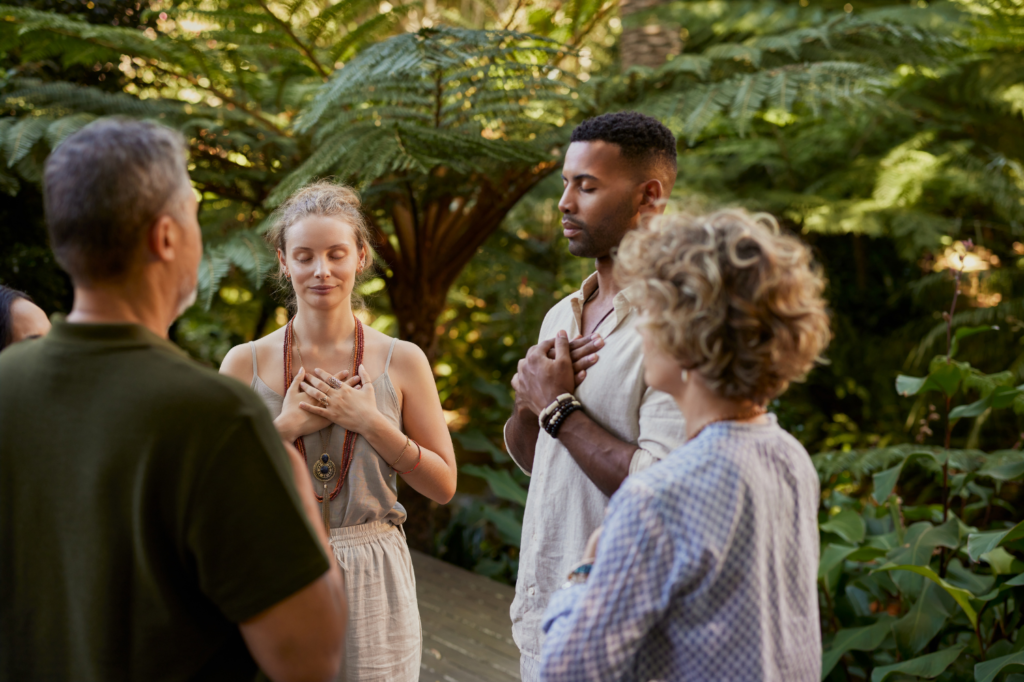
Group healing practices are structured wellness activities done in the company of others not as entertainment, but as a conscious choice to heal together. Unlike solo meditation or individual therapy, these practices use the energy of collective presence to deepen the experience.
The idea is rooted in ancient traditions. Ayurvedic wellness, yoga, sound healing, and Reiki have long been practiced in community settings because healers understood that human connection itself has a therapeutic effect. Modern research supports this group based wellness activities are linked to lower cortisol levels, improved mood, and stronger feelings of belonging.
Some examples of group healing practices include group yoga sessions, reiki healing circles, community meditation, sound bath gatherings, and breathwork sessions. Each of these creates a shared healing space where individuals support each other’s inner growth.
2. The Roots of Group Healing in Ancient Traditions
Healing in community is not a modern trend it is one of the oldest forms of human care. In ancient India, Ayurvedic practitioners gathered students and patients in ashrams where collective routines waking together, eating together, practicing pranayama together were considered essential to healing. This is the foundation of ayurvedic wellness practices.
In indigenous cultures across the world, ceremonies and healing rituals were always communal. Japan’s forest bathing (shinrin-yoku) is traditionally practiced in groups. Tibetan singing bowl ceremonies bring communities together around sound and vibration. Even early yoga traditions were gurukul based a shared living and learning environment.
What these traditions understood is something modern neuroscience is now confirming: humans are wired for co-regulation. When we are in a calm, safe group, our nervous systems mirror each other anxiety decreases, heart rate settles, and the body enters a healing state more readily than when alone.
3. Mental Health Benefits of Healing Together
Practising wellness in a group setting adds a layer of benefit that solo practice cannot fully replicate. Here is how group healing practices support mental health:
- Stress Reduction — Being in a calm, intentional group naturally lowers cortisol. Whether it is a meditation session or a guided breathwork circle, the collective stillness amplifies relaxation.
- Reduced Anxiety and Overthinking — Group healing creates a container where the mind does not need to manage everything alone. Many people find that reiki healing for overthinking becomes more effective in a group because shared energy supports deeper release.
- Improved Emotional Balance — Regular participation in group wellness builds emotional resilience. Mindfulness practiced with others, for instance, strengthens the ability to observe emotions without reacting — a core principle of mindfulness for emotional balance.
- Better Sleep — Group healing sessions that include relaxation, breathwork, or sound healing are linked to improved sleep quality, as the nervous system is gently guided into a parasympathetic (rest-and-digest) state.
- Sense of Belonging — Loneliness is one of the strongest predictors of poor mental health. Group healing directly addresses this by building genuine human connection around shared intention rather than performance or productivity.
Note: Group healing practices are complementary in nature and are not a replacement for professional medical or psychological care.
4. How Group Energy Deepens Individual Healing
One of the most fascinating aspects of group healing is how the energy of the room itself becomes part of the practice. In sound healing, for example, a single singing bowl in a group setting creates resonance that participants feel not just individually but collectively the vibrations layer and deepen.
In yoga, practicing alongside others creates a kind of invisible accountability and encouragement. Students often hold poses longer, breathe more deeply, and feel more present. The benefits of yoga for mind and body are genuinely amplified when practice becomes shared.
In Reiki circles, practitioners channel healing energy not just to one person but to the group as a whole creating what many describe as a field of calm that everyone in the room can feel.
This is not mystical it reflects the science of co-regulation and mirror neurons. When one person breathes slowly and consciously in a group, others instinctively begin to mirror that breath. Calm becomes contagious. This is why group healing is not simply “solo healing done with others” it is qualitatively different and often more powerful.
5. How to Start Group Healing Practices in Your Life
Getting started with group healing does not require a retreat or a large investment. Here are practical ways to begin:
- Join a local yoga class — Even one group session per week can shift your mental state significantly. Focus on studios that emphasize breath and mindfulness alongside movement. Explore yoga poses for flexibility and strength to prepare for your first class.
- Attend a group meditation or mindfulness session — Many wellness centres and online platforms offer weekly group sittings. Begin with mindfulness meditation for beginners to build your foundation before joining a group.
- Try a sound healing group session — Sound baths are gentle, accessible, and deeply relaxing. No experience is needed — you simply lie down and receive. Learn more about sound healing benefits and techniques.
- Explore a Reiki healing circle — Reiki circles are open to both practitioners and receivers. They are a beautiful way to experience energy healing in community. Start by understanding how Reiki healing works.
- Create your own small group — Healing does not require a formal setting. Invite two or three trusted people to meditate together weekly, share an Ayurvedic meal, or practice breathing exercises from Ayurvedic wellness traditions.
Start with one practice that resonates and stay consistent. The benefits of group healing for mental health build steadily over time — the most important step is simply the first one.
Conclusion
Group healing practices for mental health offer something that individual wellness routines cannot always provide the experience of healing witnessed, held, and shared. Whether through yoga, meditation, Reiki, sound healing, or Ayurvedic community practices, coming together with intention creates a space where inner transformation happens more naturally.
You do not need to heal alone. Take the first step this week find one group practice near you or online, and experience the difference that shared healing can make.
Which group healing practice resonates most with you? Share your thoughts in the comments below.
Frequently Asked Questions
Q1: What are group healing practices for mental health?
Group healing practices are wellness activities done collectively such as yoga, meditation, sound healing, breathwork, or Reiki circles where the shared energy of the group supports each individual’s healing journey.
Q2: Are group healing practices better than solo practice?
Both have value. Solo practice builds personal discipline and self-awareness. Group practice adds co-regulation, emotional support, and amplified energy that can deepen and accelerate the healing experience.
Q3: How often should I attend group healing sessions?
Even once a week makes a meaningful difference. Consistency matters more than frequency a weekly group yoga or meditation session practiced regularly over months creates lasting mental health benefits.
Q4: Can beginners join group healing practices?
Absolutely. Most group healing practices yoga, sound baths, meditation circles, Reiki gatherings are fully accessible to beginners. No prior experience is needed, only an open mind.
Q5: What is the connection between group healing and Ayurveda?
Ayurveda has always emphasised community as part of holistic health. Shared meals, group rituals, and collective routines are considered essential to maintaining balance or what Ayurveda calls dinacharya (daily rhythm).